
Your Trade Show Stand Questions Answered: The FAQ Guide Australian Exhibitors Actually Need
Got questions about your trade show stand? We answer the 12 most common questions Australian exhibitors ask — from budgeting to branded merch.

Written by
Layla Okoro
Event Merchandise
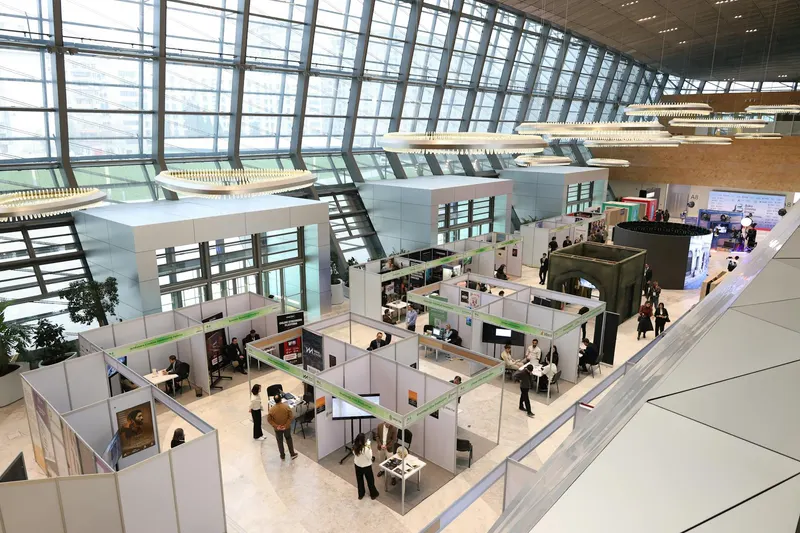
Everything You’ve Been Wondering About Your Trade Show Stand, Finally Answered
Australian exhibitors spend billions of dollars collectively on trade shows each year — booth fees at venues like the Melbourne Convention and Exhibition Centre, travel to Perth for mining expos, staffing costs for multi-day events at the ICC Sydney, and enough branded merchandise to fill a warehouse. Yet despite all that investment, many businesses still walk into events underprepared, underbranded, and unsure whether their trade show stand is actually working for them.
This FAQ guide tackles the questions that come up time and again from Australian businesses — whether they’re setting up their first stand at a local industry expo or refining a national event strategy after years of trial and error. Read through, bookmark the sections relevant to you, and go into your next event knowing exactly what you’re doing and why.
Q1: What Makes a Trade Show Stand Actually Effective?
Effectiveness at a trade show stand isn’t about spending the most money or having the flashiest display. It comes down to three things working together: clarity, magnetism, and follow-through.
Clarity means someone walking past your stand at a brisk pace — which is exactly how most visitors move through a busy expo floor — can understand what your business does within about three seconds. If your signage requires reading a paragraph of text or deciphering abstract imagery, you’ve already lost them.
Magnetism is everything that draws people in: an interesting display, an interactive element, a compelling giveaway, or even just the energy of your staff. Stands that feel welcoming and purposeful attract foot traffic. Stands that look like a table with a tablecloth and some brochures do not.
Follow-through is the piece most businesses neglect. A great stand experience that isn’t backed up by a solid lead capture process, post-event outreach, or branded merchandise that keeps your business top of mind is a missed opportunity. All three elements need to be working simultaneously.
Q2: How Much Should I Budget for My Trade Show Stand?
This varies considerably depending on the scale of the event, your industry, and your objectives — but a useful framework is to think of your stand budget as a percentage of your total event spend. If you’re paying $4,000 for a booth and $3,000 for travel and accommodation, spending $200 on a basic pull-up banner and a box of generic pens is wildly disproportionate. A rough guide is to allocate between 20% and 35% of your total event investment to stand setup and branded merchandise combined.
For a small to mid-sized stand at a state-level industry expo, that might mean:
- Display materials (banners, tablecloths, display boards): $500–$1,500
- Branded merchandise and giveaways: $800–$3,000 depending on quantity and product quality
- Lead capture tools or technology: $200–$600
- Incidentals (power boards, storage, transport cases): $100–$400
Don’t forget to factor in freight costs, especially if you’re shipping a trade show stand to Brisbane or Adelaide from your Sydney or Melbourne warehouse. Those costs add up and catch businesses off guard every single time.
Q3: What Branded Merchandise Should I Give Away at My Trade Show Stand?
The golden rule of trade show merchandise: give away things people will actually use, not things that end up in the bin at the end of the day. Every item on your stand should have a purpose — to remind the recipient of your brand, to communicate your values, or to start a conversation.
High-performing categories for Australian trade shows include:
- Reusable tote bags — immediately useful on the show floor and taken home
- Quality pens and notebooks — still the workhorse of B2B merchandise when done well
- Branded water bottles or keep cups — particularly effective given Australia’s strong coffee culture and sustainability awareness
- Tech accessories — phone stands, cable organisers, and power banks resonate with professional audiences
- Confectionery — Australian-made chocolates or lollies create goodwill and conversation
The key is matching the merchandise to your audience. A stand at an agricultural field day in regional Queensland calls for something different than a fintech expo in Melbourne’s CBD. Think about what your ideal customer uses daily, and brand that item well.
Q4: How Far in Advance Should I Order My Trade Show Stand Materials?
Earlier than you think. Much earlier. This is one of the most consistent pain points for Australian exhibitors — leaving merchandise and display orders too late, then paying premium rush fees or compromising on quality.
As a general guide:
- Custom display systems (fabric displays, modular stands): 4–6 weeks minimum
- Branded merchandise (standard products): 2–4 weeks
- Fully custom merchandise (bespoke products, unusual materials): 6–10 weeks
- Apparel with embroidery or printing: 3–5 weeks
Build in additional buffer time if your event falls around peak periods: Christmas and New Year shutdowns can add 2–3 weeks to production timelines, and the pre-Easter period in March and April gets busy across the promotional products industry. If your trade show is in late July or August — prime expo season in many Australian industries — start ordering in May.
Q5: What Signage Do I Absolutely Need for My Trade Show Stand?
At minimum, every trade show stand needs a backdrop or display that shows your logo and tagline prominently, and at least one piece of signage visible from aisle level that communicates your core offer. Beyond that, the specific signage depends on your space.
For a 3x3 metre booth (a common size at Australian expos), a practical signage kit might include:
- One retractable banner positioned to attract attention from the main aisle
- A printed tablecloth branded with your logo and website
- A hanging or standing display for product images or key messages
- Smaller counter cards or literature holders for specific offers or product details
If you have a larger footprint — say, a 6x6 at a major industry expo at the Gold Coast Convention Centre — you have room for more visual storytelling. Fabric backwalls, LED lighting, and dimensional signage all become viable and worthwhile investments at that scale.
Q6: Should My Staff Wear Branded Apparel at the Stand?
Absolutely, yes — and this is an area where Australian businesses consistently underinvest. Branded staff uniforms or coordinated apparel serve multiple purposes: they make your team instantly identifiable, they reinforce brand professionalism, and they create visual cohesion across your stand.
The apparel doesn’t need to be elaborate. A quality polo or button-down shirt embroidered with your logo in a consistent colour palette is entirely sufficient. What matters is that every team member at the stand is dressed consistently and that the apparel looks polished, not cheap.
A practical tip: have team members try on apparel before the event, not the morning of. Sizing issues and fit problems are incredibly common and entirely avoidable. Also consider the venue climate — some Australian exhibition centres run very cold air conditioning, so having branded corporate jackets or layering options on hand is a smart call.
Q7: How Do I Attract People to My Trade Show Stand?
Foot traffic doesn’t just happen — it’s engineered. The businesses with the most visited stands aren’t necessarily the biggest or the most expensive; they’re the most intentional.
Tactics that consistently work in the Australian trade show context:
- Pre-event promotion: Use your email list and social channels to tell existing contacts and prospects which event you’ll be at and where to find you. Offer a specific reason to visit — an exclusive demo, a limited giveaway, or a first look at something new.
- Interactive elements: Spin-the-wheel prize draws, product demonstrations, or even a well-run Q&A session draw crowds and create natural conversation starters.
- Strategic giveaway positioning: Place your most visually interesting or desirable merchandise where it’s visible from the aisle, not hidden under the table.
- Open stand layout: Avoid creating barriers with tables placed across the front of the stand. An open layout invites people in rather than keeping them at arm’s length.
- Engaged staff posture: This sounds obvious, but staff who are standing, making eye contact, and actively greeting passersby dramatically outperform those sitting behind a laptop.
Q8: What’s the Best Way to Capture Leads at My Trade Show Stand?
Lead capture is where event ROI is actually built, and it’s worth having a clear, consistent process before the day begins. Options range from simple to sophisticated:
- Badge scanning: Most major Australian expos provide scanning apps or devices that let you capture attendee details instantly. If this is available, use it.
- Digital forms: A tablet-based form connected to your CRM is clean, fast, and eliminates the need to transcribe business cards later.
- Business card collection with a system: If you’re going analogue, have a physical system — separate collection points for hot, warm, and cold leads, for example — so your post-event follow-up is organised.
Whatever system you use, make sure every team member on the stand understands it and uses it consistently. A lead captured in three different ways by three different people is a follow-up nightmare.
Q9: How Do I Make My Trade Show Stand Stand Out in a Crowded Hall?
Differentiation at a trade show stand comes from being specific about who you’re for and being genuinely interesting to that group, rather than trying to appeal to everyone.
Some approaches that separate memorable stands from forgettable ones:
- A clear visual point of difference: Unusual materials, bold colour choices, or height variations in your display create visual contrast against the sea of standard setups.
- A specific, single message: Stands that try to communicate everything communicate nothing. Choose one core message and repeat it visually and verbally.
- A reason to linger: Comfortable seating, a product demonstration, or an engaging team member hosting a brief presentation gives people a reason to stay longer than a 20-second glance.
- Merchandise worth talking about: A genuinely clever or high-quality branded item will be discussed on the show floor. Word travels fast in a concentrated venue — use that to your advantage.
Q10: What Are the Most Common Trade Show Stand Mistakes Australian Businesses Make?
After talking to exhibitors across events in every major Australian city, a handful of mistakes come up repeatedly:
- Ordering merchandise without checking production timelines — leading to rushed orders, higher costs, or items arriving after the event
- Bringing too much print collateral — brochures and catalogues often go unread and become landfill at the event’s end; prioritise digital alternatives where possible
- Neglecting the stand layout — placing furniture and display items without thinking about traffic flow and approachability
- Staffing the stand with the wrong people — knowledgeable, communicative team members are worth far more than seniority alone
- Not following up within 48 hours — the window for converting warm trade show leads closes fast; a prompt, personalised follow-up dramatically improves conversion rates
- Choosing giveaways based on unit cost alone — cheap merchandise that breaks or looks poor reflects directly on your brand
Q11: Can Small Businesses Run a Competitive Trade Show Stand?
Definitively yes — and in many ways, smaller businesses have advantages at trade shows that larger organisations don’t. Agility, personality, and genuine passion for a product or service can be more compelling than a corporate-polished display with no soul.
A small business running a smart, well-branded, well-staffed stand at a 3x3 booth will out-perform a larger competitor with a cluttered, poorly staffed 6x9. Focus your budget on the elements that drive real outcomes: quality signage that clearly communicates your offer, branded merchandise that your target audience will find genuinely useful, and a team that’s prepared to have real conversations.
Local events — industry associations, regional business expos, chamber of commerce events — are also excellent proving grounds for small businesses before scaling up to major national shows.
Q12: What Should I Do After the Trade Show to Maximise My Stand Investment?
The event ends, the stand comes down, and many businesses treat that as the finish line. It isn’t — it’s the starting line for the actual work of converting interest into business.
A solid post-event process includes:
- Follow up within 24–48 hours while the event is still fresh in attendees’ minds
- Personalise your outreach — reference the conversation you had, not a generic “great to meet you at [event]” email
- Send a tangible follow-up for your highest-priority leads — a handwritten note, a relevant article, or a small branded item can make your outreach memorable
- Review your merchandise: Which items were most popular? Which generated the most conversation? Use that data to refine your approach for the next event
- Calculate your return: Assess leads generated, conversations had, and deals closed against your total event investment to determine whether the event format and your stand execution deserve a repeat
A trade show stand is never just a one-off expense. Treated as a continuous learning experience, each event makes the next one sharper, better targeted, and more likely to deliver real commercial outcomes for your business.